
Blog
A Homeowner’s Guide to Buying the Right Toilet Bowl in Singapore

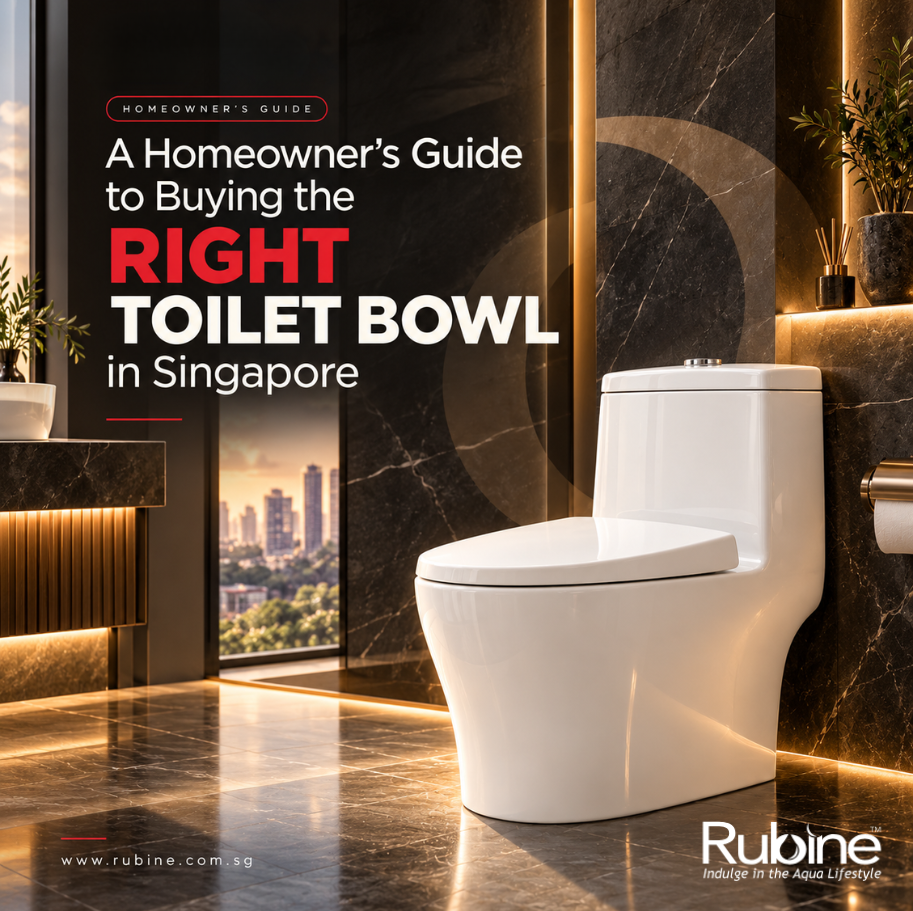
Choosing the right Toilet Bowl Singapore homeowners can rely on means balancing bowl type, flushing technology, water efficiency and installation fit — all against your HDB or condo bathroom’s existing plumbing. This guide walks through every decision point so you buy once and buy right.
Why Toilet Bowl Choice Matters More Than You Think
The toilet bowl is the single most-used fixture in any Singapore home — flushed between 1,500 and 2,000 times a year per person. Yet most homeowners spend less time choosing it than they do picking a new coffee machine. The result is years of water bills that could have been lower, cleaning headaches that could have been avoided, and a replacement cycle that comes sooner than it should.
A well-chosen toilet bowl saves water, resists stains, flushes cleanly in a single press and matches the look of the rest of your bathroom. A poor choice does the opposite — and because toilets are plumbed into the floor, replacing one is far more disruptive than swapping a tap or a basin.
What Are the Main Types of Toilet Bowls Available in Singapore?
Singapore bathrooms are typically fitted with one of three toilet bowl formats. Knowing which one works with your plumbing is the first filter.
Wall Hung Toilet Bowl
A Wall Hung Toilet Bowl mounts to the bathroom wall with the cistern concealed inside the wall cavity. Only the ceramic pan is visible, which frees 25-30 cm of visible floor space and makes mopping effortless. This format needs a full renovation to install — the wall must be opened for the in-wall carrier frame — but it delivers the cleanest contemporary look for condo bathrooms.
Floor Mounted Toilet Bowl
The traditional close-coupled design where the cistern sits on top of the pan and the whole unit rests on the floor. This is the format most Singapore HDB flats were originally fitted with. It is the easiest to swap into an existing bathroom and the lowest-cost option for straightforward upgrades.
One-Piece Toilet Bowl
A seamless ceramic unit where the tank and pan are moulded together with no join. The lack of a seam means fewer places for grime to collect, making it the easiest format to clean. One-piece toilets tend to sit between wall hung and standard floor mounted on price.
Should You Upgrade to a Smart Toilet Bowl?
A Smart Toilet Bowl adds heated seats, auto-flush sensors, built-in bidet spray, warm-air drying, LED night lighting and self-cleaning rims. Singapore’s warm climate makes the heated-seat benefit less relevant than in Europe, but the integrated hygiene features and auto-flush functions remain popular among premium-renovation homeowners.
If a built-in cleansing function is on your must-have list but a full smart unit is beyond budget, Rubine’s dedicated Bidet Toilet range offers spray attachments and seat covers that deliver the same hygiene benefit at a fraction of the cost. These retrofit onto almost any existing toilet without major plumbing work.
Flushing Technology — The Spec That Decides Daily Performance
The flushing mechanism determines whether a toilet clears in one press or needs three. Three technologies are common in Singapore:
Siphonic flushing uses negative pressure to pull waste down — quieter and more thorough, but slower to refill. Washdown flushing uses water pressure from above to push waste out — faster, louder, and more water-efficient. Dual-flush systems let you choose a 3-litre half flush for liquid waste and a 4.5-6 litre full flush for solid waste, cutting annual water consumption by up to 40%.
For Singapore homes, a dual-flush washdown toilet with WELS 3-tick or 4-tick rating is the sweet spot — strong flush performance, low water use, and compliance with PUB’s efficiency guidelines.
How to Size the Right Toilet Bowl for an HDB or Condo Bathroom?
HDB bathrooms are typically 1.5 to 2.2 square metres, so the toilet needs to fit without blocking the shower zone or the basin. The three measurements that matter are the rough-in (distance from wall to the centre of the drain pipe — usually 300 mm or 400 mm in Singapore), the pan length (standard 650-700 mm) and the seat height (comfort height is 420-450 mm, taller than older 380 mm units).
For compact HDB bathrooms, a short-projection toilet (under 650 mm) frees valuable floor space. Condo bathrooms with more floor area can accommodate full-length comfort models or wall hung installations without feeling cramped.
Water Efficiency — Why WELS Rating Matters
Every toilet sold in Singapore must carry a WELS (Water Efficiency Labelling Scheme) rating from PUB — ranging from zero to four ticks. A 4-tick toilet uses under 3.5 litres per average flush; a 3-tick model uses 3.5-4.5 litres. Over a four-person household’s year, the gap between a 2-tick and a 4-tick toilet is roughly 30,000 litres — enough to make the price difference pay back within 18 months.
Installation, Warranty and After-Sales Support
Rubine’s complete Toilet Bowl Singapore range covers all three formats — wall hung, floor mounted and one-piece — across every price band, each backed by a 5-year manufacturer warranty and Singapore-based service support. A toilet is one of the few fixtures where after-sales support genuinely matters. Ceramic pans rarely fail, but internal cistern mechanisms — fill valves, flush valves, flappers — are user-serviceable parts that need replacing every 5 to 8 years. Buying from an authorised Singapore distributor means you can source replacement parts for the lifetime of the product.
When planning a full bathroom renovation, pairing a new toilet with a matching Shower Mixer and basin set gives the room a unified design language and avoids mismatched finishes. Bathroom renovations also tend to bundle other major fixtures — a new Water Heater is a common companion upgrade, since the plumbing wall is already open. Grouping these decisions reduces labour cost and ensures consistent water pressure across the finished bathroom.
Frequently Asked Questions
What is the average lifespan of a Toilet Bowl Singapore homeowners can expect?
A quality ceramic toilet bowl lasts 15 to 25 years with correct installation. The ceramic itself is nearly indefinite — most failures occur in cistern internals (fill valve, flush valve), which are user-serviceable modules you can replace without changing the whole unit. Rubine’s toilet bowl range is backed by a 5-year manufacturer warranty.
Is a Smart Toilet Bowl worth the extra cost in Singapore?
Yes if you value the integrated bidet spray, heated seat and auto-flush features and plan to stay in the home for 7+ years. For shorter stays or tighter budgets, a standard toilet bowl paired with a separate bidet attachment delivers similar hygiene benefits at a fraction of the cost.
Can I install a Wall Hung Toilet Bowl in an existing HDB flat?
Yes, but it requires opening the wall, installing a concealed in-wall carrier frame and re-tiling the opened section. This is best done during a full bathroom renovation rather than as a standalone swap. The result frees 25-30 cm of visible floor space, which makes a real difference in a compact HDB bathroom.
What does the WELS rating on a toilet bowl mean?
WELS stands for Water Efficiency Labelling Scheme, administered by PUB in Singapore. The rating runs from 0 to 4 ticks — more ticks means less water per flush. A 4-tick toilet uses under 3.5 litres on average, saving roughly 30,000 litres per year for a family of four compared to older 2-tick units.
How do I know what rough-in size my bathroom has?
Measure the distance from the finished wall behind the toilet to the centre of the floor drain. In Singapore homes this is almost always 300 mm or 400 mm. The toilet you choose must match this rough-in or installation will not fit.
Does Rubine supply both Toilet Bowl and installation support?
Yes. Rubine supplies the toilet bowl across all three formats — wall hung, floor mounted and one-piece — and our service team can coordinate installation support through authorised partners in Singapore. Call us for product selection help and site measurement guidance before you buy.